Workers glance at their boots. Someone sips coffee. The foreman clears his throat. Another safety talk begins — and within three minutes, attention drifts. This scene repeats daily across job sites, warehouses, and industrial yards. The root cause? Most toolbox talks miss the mark: they’re scripted, impersonal, and disconnected from real risks.
A strong toolbox talk example doesn’t just check a compliance box. It sparks engagement, surfaces hidden hazards, and builds a culture where safety is spoken, not posted. This article breaks down exactly what that looks like — with real examples, structural guidance, and mistakes that silently undermine effectiveness.
What Makes a Toolbox Talk Effective?
Too many organizations confuse having a toolbox talk with running one. The difference lies in outcome. An effective talk:
- Lasts 5 to 10 minutes
- Focuses on a single, relevant hazard
- Involves at least three workers in discussion
- Ends with a clear action or awareness takeaway
It’s not a lecture. It’s a dialogue.
Consider a roofing crew preparing for a day of work. Instead of reciting fall protection procedures verbatim from a manual, the supervisor points to the edge of the structure and asks: "Last week, we saw a harness left unclipped near the parapet. What could’ve gone wrong — and how do we prevent it today?"
This shifts passive listening into active problem-solving. That’s the goal.
Realistic Toolbox Talk Example: Working at Height
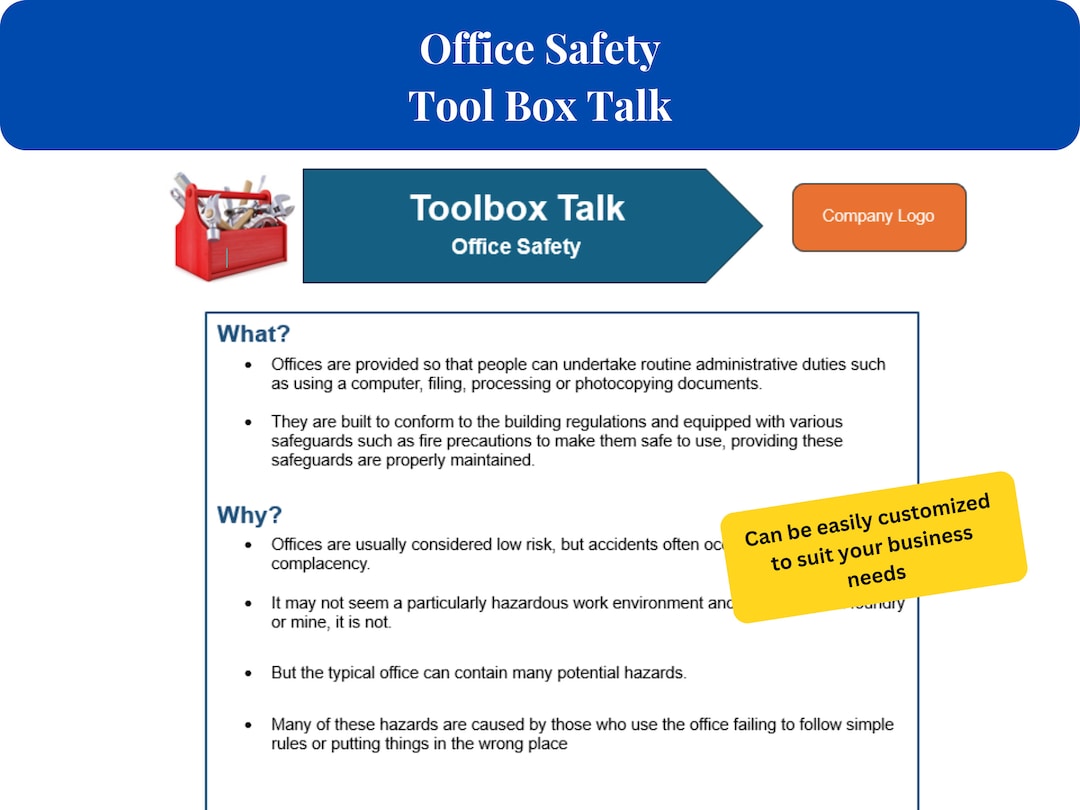
Topic: Fall Protection During Roof Access Duration: 7 minutes Location: Edge of commercial building roof Attendees: 6 crew members
“I want to talk about how we’re getting onto this roof. We’ve got two access points — the scissor lift and the fixed ladder. On Monday, Carlos noticed one of the harness lanyards wasn’t properly retracted after use. It was dangling over the edge. That’s a red flag. > So — what’s the risk here? Not just falling, but complacency. We’ve been up here a dozen times. We get comfortable. But one untethered second changes everything. > Let me ask: Who checked their harness before climbing this morning? (Three raise hands. Two don’t. One says he assumed it was fine.) > That last answer — ‘assumed it was fine’ — is exactly what we’re fighting. Equipment fails. Habits decay. We need to verify every time. > Action step: Before anyone climbs, the buddy system kicks in. Pair up. Check each other’s harness, lanyard, and anchor point. If something’s off, call it. No hesitation. > Final question: Where’s the nearest fall rescue plan posted? (One person points to the site office board.) Good. But it’s not enough to know where it is. We’ll run a 90-second drill at shift end — simulated retrieval. Let’s make sure we’re ready.”
This example works because it’s: - Specific – Tied to a real event - Interactive – Includes direct questioning - Action-oriented – Assigns a follow-up drill - Time-efficient – Stays focused
Contrast this with a common failure: reading a printed template about “General Fall Hazards” while standing in the parking lot. No context. No dialogue. No retention.
Common Mistakes That Undermine Toolbox Talks
Even well-intentioned teams sabotage their own efforts. Avoid these pitfalls:
1. Using Generic Topics “Electrical Safety” is too broad. “Inspecting extension cords before use in wet conditions” is actionable.
2. Monologuing Instead of Engaging If workers aren’t speaking, the talk is failing. Ask open-ended questions: - “What would you do if…?” - “Have you seen this risk before?” - “What’s one thing we could improve?”
3. Repeating the Same Topics Monthly Crews tune out when content feels recycled. Rotate topics based on current tasks, season, or incident trends.
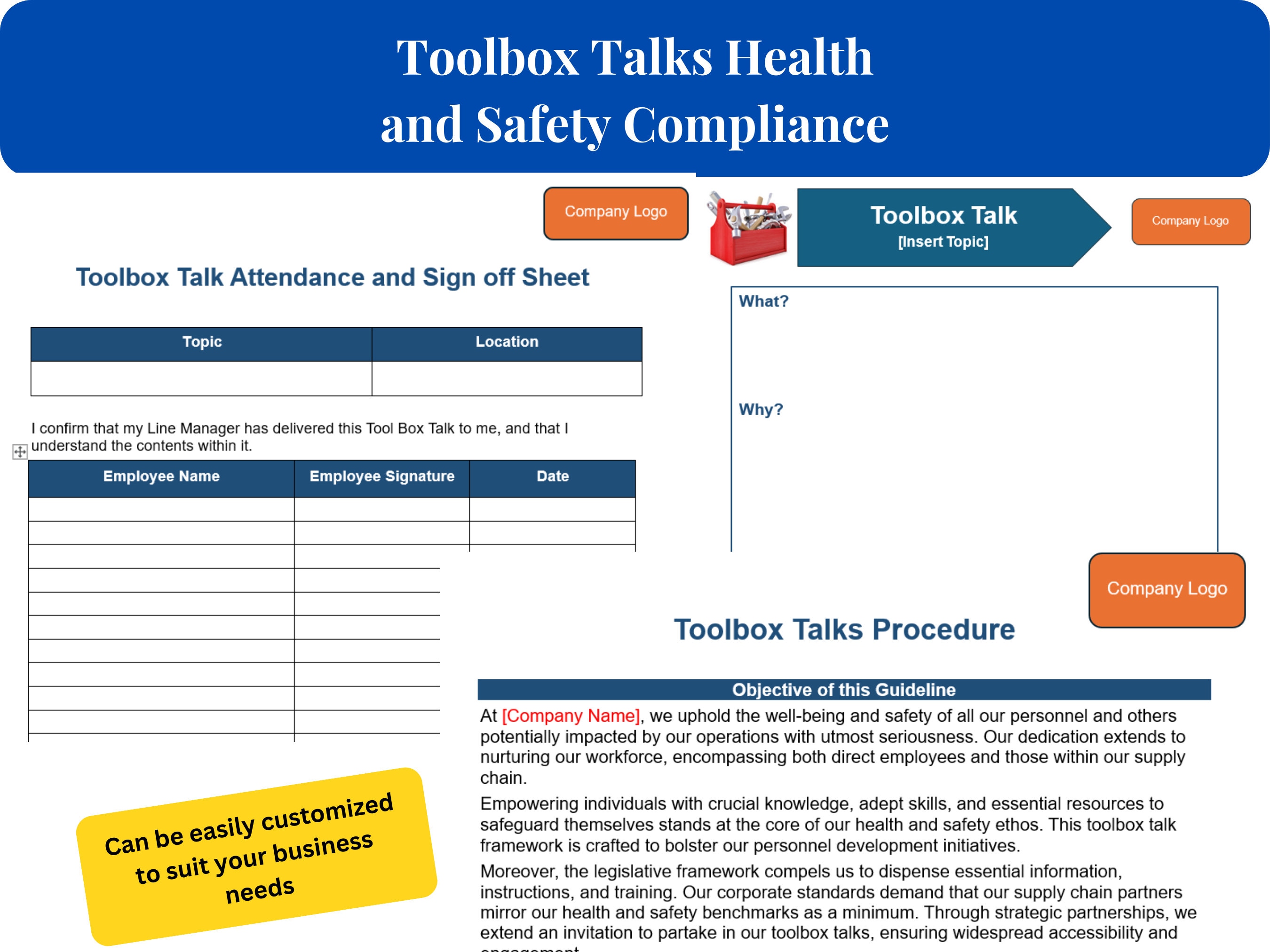
4. Skipping Documentation A talk only “counts” if it’s recorded. Use a simple sheet with: - Date and time - Topic - Attendee signatures - Supervisor name
Store it for audits — and as proof of cultural effort.
5. Holding Talks in Distracting Locations Don’t conduct a fall protection talk in a noisy laydown yard. Choose a quiet, hazard-free space where workers can focus.
When to Hold a Toolbox Talk
Timing determines relevance. Ideal triggers include:
- Start of a new task (e.g., switching from framing to roofing)
- Introduction of new equipment (e.g., first use of a boom lift)
- After an incident or near-miss (e.g., a dropped tool from height)
- Weather changes (e.g., icy conditions, high winds)
- New crew members joining
Example: After a near-miss involving a forklift and a pedestrian, a warehouse supervisor holds an immediate talk at the loading dock. The topic? “Blind spots and communication during material moves.” Workers brainstorm hand signals and propose installing convex mirrors — a solution born from the discussion.
Reactive talks often have the highest impact because the risk is fresh, visible, and emotionally resonant.
5 Proven Topics for Your Next Toolbox Talk
Use these real-world subjects to drive engagement:
- Proper Use of Ladders on Uneven Ground
- - Focus: Leveling feet, securing top, 3-point contact
- - Prompt: “How many of you have used a ladder on gravel or a slope?”
- Heat Stress Recognition and Response
- - Focus: Early signs (dizziness, nausea), hydration, work/rest cycles
- - Prompt: “What’s your go-to move when you start feeling overheated?”
- Safe Handling of Chemical Containers
- - Focus: Label reading, PPE, spill kits, ventilation
- - Prompt: “What would you do if a drum started leaking?”
- Lockout/Tagout (LOTO) Verification
- - Focus: Double-checking energy isolation before maintenance
- - Prompt: “Have you ever assumed a machine was locked out — but it wasn’t?”
- Dropped Object Prevention
- - Focus: Tool tethering, secure storage at height, hard hat zones
- - Prompt: “What tools do we use above others — and are they tethered?”
Each of these can be delivered in under 8 minutes and tied directly to daily work.
Integrating Toolbox Talks Into Daily Workflow
A talk shouldn’t feel like an interruption. Build it into natural rhythms:
- Pre-shift huddle: Start with safety before task assignments
- Tool check-in/out: Discuss the hazard linked to the tool being issued
- Post-incident pause: Stop work for 5 minutes after a near-miss
- Task transition: Use the 10-minute lag between activities
Example: A crew finishes concrete pouring and prepares to strip forms. Before retrieving saws and pry bars, the supervisor runs a quick talk on hand protection and pinch-point awareness. It takes 6 minutes — and aligns with the next physical action.
This method embeds safety into workflow, not as a separate chore.
Digital Tools to Support Toolbox Talk Delivery
Paper logs work, but digital platforms improve consistency and tracking. Here are five reliable options:
| Tool | Key Features | Best For |
|---|---|---|
| iAuditor (by SafetyCulture) | Template library, photo capture, real-time reporting | Teams needing audit-ready records |
| SiteDocs | Offline access, automatic PDF logs, role-based alerts | Large contractors with multiple sites |
| GoCanvas | Custom forms, e-signatures, cloud storage | Smaller crews wanting simplicity |
| SafetyTek | Voice-to-text notes, OSHA compliance tracking | Fast-paced environments |
| Procore (Safety Module) | Integrated with project management, analytics dashboard | Enterprise-level construction firms |
Choose based on team size, tech access, and reporting needs. Even a simple tablet with a checklist app beats illegible handwriting in a rain-soaked notebook.
Building a Culture Where Toolbox Talks Matter
The best talks don’t come from compliance officers — they come from workers. Empower crews to lead discussions. Rotate the role weekly. Recognize those who spot risks or improve formats.
One electrical contractor implemented “Talk of the Week” — where the best toolbox idea (submitted by any employee) gets recognized at the monthly meeting. Result? Participation jumped 70% in two months.
When workers own the message, they defend it.
Final Takeaway: Quality Over Frequency
You can run a toolbox talk every day and still have zero impact — if it’s repetitive, irrelevant, or disengaging. Instead, focus on quality: - Make it timely - Keep it interactive - Tie it to real work - Document and act on feedback
A single powerful talk — where someone admits a mistake, a hazard is corrected, or a new rule is formed — does more than ten robotic readings ever will.
Run your next talk not because you have to, but because something needs to be said. That’s when safety becomes real.
FAQ
What should you look for in Toolbox Talk Example: Real-World Safety Communication? Focus on relevance, practical value, and how well the solution matches real user intent.
Is Toolbox Talk Example: Real-World Safety Communication suitable for beginners? That depends on the workflow, but a clear step-by-step approach usually makes it easier to start.
How do you compare options around Toolbox Talk Example: Real-World Safety Communication? Compare features, trust signals, limitations, pricing, and ease of implementation.
What mistakes should you avoid? Avoid generic choices, weak validation, and decisions based only on marketing claims.
What is the next best step? Shortlist the most relevant options, validate them quickly, and refine from real-world results.